


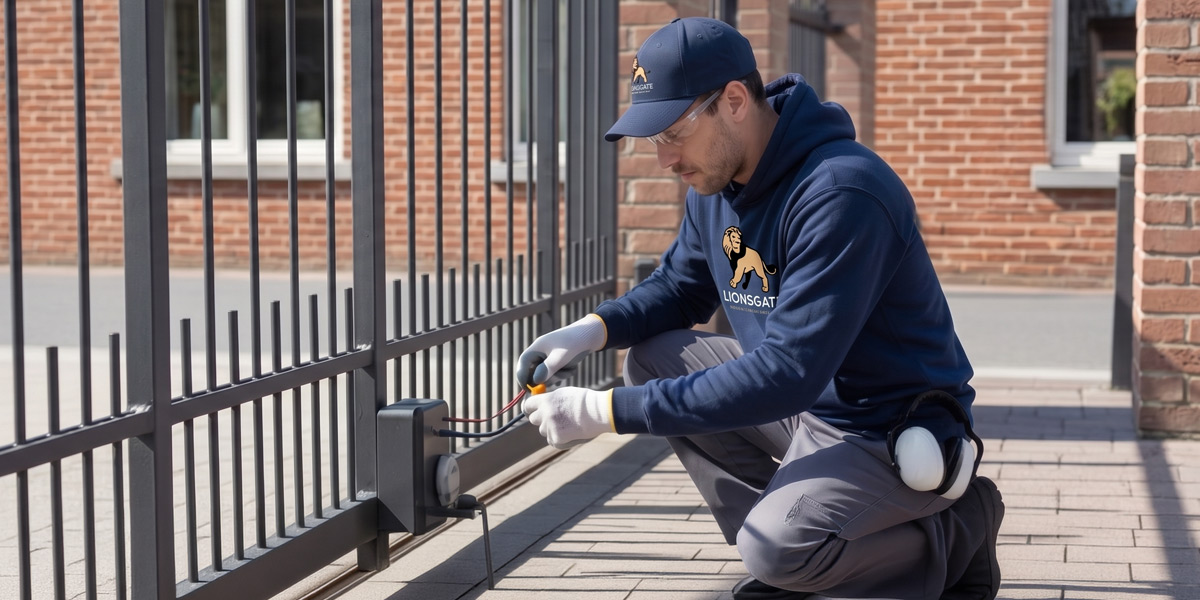

Bay Area Lions Gate is an Official Certified Centrios Partner
The mechanical operation of an automated sliding driveway gate is a sophisticated synthesis of structural engineering, electrical control systems, and mechanical drive assemblies. As these systems are subjected to continuous environmental exposure and repetitive mechanical cycles, the degradation of individual components is inevitable. A failure to implement a proactive maintenance strategy often results in catastrophic system failure, significant security vulnerabilities, and potential liability risks associated with safety non-compliance. This report provides an exhaustive technical analysis of the ten most critical maintenance protocols required to ensure the longevity, safety, and operational efficiency of sliding gate systems.
1. Structural Integrity and Foundation Stabilization
The operational life of a sliding gate is fundamentally limited by the stability of its foundation and the structural integrity of the gate frame. A sliding gate represents a high-mass object often ranging from 500 lbs to over 5,000 lbs moving along a fixed linear axis. Any deviation in the levelness of the track or the verticality of the support posts introduces parasitic loads that exponentially increase wear on the motor and drive mechanism.
Monthly inspections must prioritize the identification of structural fatigue. For metal gates, this includes searching for hairline fractures in weld points, which often occur due to the harmonic vibrations generated during the start and stop phases of the gate cycle. For wooden gates, the focus shifts to moisture-induced warping or rot, which can alter the center of gravity and cause the gate to bind within its guides. Foundation settlement, common in regions with high soil moisture or poor compaction, can cause the track to sag. If a gate requires more force to move at specific points along its travel, it is likely a symptom of foundation shifting.
| Material Component | Primary Stress Factor | Maintenance Indicator |
|---|---|---|
| Steel/Iron Frame | Oxidative Corrosion | Surface rust, flaking paint, or compromised welds. |
| Aluminum Frame | Harmonic Vibration | Stress cracks near motor mounting brackets. |
| Concrete Foundation | Soil Expansion/Contraction | Cracking or tilting of the track pad. |
| Support Posts | Wind Loading | Sagging or leaning, leading to latch misalignment. |
Structural maintenance also extends to the geometry of the gate installation. According to ASTM F2200 standards, the gate must be designed to prevent it from falling over more than 45 degrees from the vertical plane if it becomes detached from its supporting hardware. This is typically achieved through the installation of physical "fall-over" protection brackets. Ensuring these brackets are securely anchored and free from corrosion is a critical safety and structural requirement.
2. Precision Management of the Track and Substrate Path
The track serves as the guide rail for the gate's entire mass. In track-based systems, the interface between the wheel and the rail is a primary point of friction. The accumulation of debris, ranging from fine silt to large pebbles, creates mechanical obstructions that can stall the motor or cause the gate to jump the track.
Weekly maintenance should involve a thorough cleaning of the track path. Utilizing a heavy-duty broom or a high-pressure air blower is necessary to remove inorganic debris like stones and sand, as well as organic material such as wet leaves and pine needles. In colder climates, the accumulation of snow and ice within the track channel is particularly hazardous; if the gate is forced to move against an ice blockage, the resulting torque spike can strip the internal gears of the operator.
Beyond simple cleaning, the physical condition of the track must be assessed. Misalignment of the track, even by a few millimeters, can increase the coefficient of rolling friction, defined as:
Fr = Crr · N
Where is the rolling resistance, is the rolling friction coefficient, and is the normal force (the weight of the gate). As debris or rust increases , the motor must work harder, shortening its Mean Time Between Failure (MTBF). If the track is bent or anchored poorly, the gate will exhibit "jerky" movements, which are early indicators of impending motor failure. A critical threshold for maintenance is the decision to replace rather than repair; if the track is bent beyond a level plane or exhibits deep structural corrosion that impedes smooth travel, it should be replaced immediately to prevent motor burnout.
| Obstruction Type | Mechanism of Damage | Recommended Frequency |
|---|---|---|
| Gravel/Stones | Causes "flat spots" on wheels; shocks the motor gears | Weekly. |
| Wet Leaves/Mud | Traps moisture, accelerating track and wheel corrosion | Weekly. |
| Ice/Hardened Snow | Causes absolute mechanical blockage; risks motor burnout | Daily (in Winter). |
| Construction Dust | Mixes with lubricant to create an abrasive grinding paste | As needed. |
3. Advanced Lubrication and Chemical Compatibility
Lubrication in a sliding gate system is not a universal application; it requires a nuanced understanding of chemical compatibility and environmental factors. The primary goal is to reduce friction while ensuring the lubricant does not become a carrier for abrasive contaminants.
For most moving parts, including rollers, hinges, and guide wheels, a silicone-based lubricant is the professional standard. Silicone creates a dry, water-resistant film that does not attract dust or sand, making it ideal for outdoor environments. In contrast, using traditional heavy grease on an exposed track or chain in a dusty environment is a common maintenance error. The grease captures airborne particles, forming a "gritty sludge" that accelerates wear rather than preventing it.
Specific drive components, such as internal gears or heavy-duty chains, may require white lithium grease for its high-pressure tolerance and durability. However, care must be taken with synthetic components. For instance, some gate operators utilize nylon drive nuts or gears as sacrificial parts; applying petroleum-based lubricants to these can cause the nylon to swell and seize.
| Lubricant Chemistry | Best Application | Avoid Using On |
|---|---|---|
| Silicone Spray | Rollers, Bearings, Rubber Seals | Drive chains (too thin for high loads). |
| White Lithium Grease | Metal Chains, Gear Racks | Exposed tracks (attracts debris). |
| Graphite/PTFE | Lock Cylinders, Keypads | Heavy-duty bearings (insufficient load rating). |
| Marine-Grade Grease | Coastal installations (High Salt) | General residential tracks. |
A quarterly lubrication schedule is generally sufficient, though gates in coastal or sandy regions may require monthly attention to combat the higher rates of corrosion and abrasion.
4. Drive Mechanism Calibration: Chain vs. Rack and Pinion
The mechanism that transmits power from the motor to the gate is a high-stress assembly that requires precise calibration. Sliding gates typically employ either a chain drive or a rack-and-pinion system, each with distinct failure modes.
In chain-drive systems, tension management is the most critical maintenance task. A chain that is too loose will sag and eventually derail or whip, causing damage to the enclosure. A chain that is too tight places excessive radial load on the motor's output shaft, leading to premature bearing failure. Tension should be adjusted so there is approximately 1 inch of "play" for every 10 feet of chain length. Lubrication of the chain must be performed sparingly with a specialized chain lube that penetrates the rollers without leaving a sticky exterior residue.
Rack-and-pinion systems require the gear rack, the toothed bar attached to the gate, to be perfectly aligned with the pinion gear on the motor. Over time, the mounting bolts for the rack can loosen due to vibration, causing the gear teeth to "skip" or grind. This not only damages the teeth but also introduces shock loads into the motor's gearbox. Maintenance should involve tightening all rack fasteners and checking the mesh gap, which should typically be 1-2 mm to allow for thermal expansion without causing tooth binding.
| Drive Type | Primary Maintenance Task | Indicator of Misalignment |
|---|---|---|
| Silicone Spray | Tension adjustment and link cleaning. | Rhythmic "slapping" sound or jerky starts. |
| White Lithium Grease | Fastener torque and tooth mesh audit. | Grinding noises or visible metal shavings. |
| Graphite/PTFE | Fluid level check and seal inspection. | Visible oil leaks or loss of driving force. |
5. Safety System Validation and Regulatory Compliance
Automated gates are inherently dangerous machines. Modern safety standards, specifically UL 325 and ASTM F2200, dictate the minimum safety features required to prevent entrapment and injury. Maintaining these systems is both a functional and a legal imperative.
The most common safety device is the photoelectric sensor (photo-eye). These sensors project an infrared beam across the gate's path; if the beam is broken, the gate must stop or reverse. Monthly testing is mandatory. This is performed by placing a solid object in the gate's path during its closing cycle.5 Failure of this test often stems from dirty lenses, caused by cobwebs, dust, or mudm or physical misalignment. Under the 2018 UL 325 revisions, the gate operator must monitor these sensors; if a sensor fails its internal diagnostic, the gate should be rendered inoperable to prevent accidents.
In addition to sensors, physical safety features must be inspected. This includes ensuring that "Warning" signs are clearly posted on both sides of the gate and that the emergency manual release mechanism is functional. The manual release is critical during power outages or motor failures; if the release is seized due to rust or lack of use, occupants may be trapped behind the gate during an emergency.
| Safety Component | Test Frequency | Compliance Goal (UL 325/ASTM F2200) |
|---|---|---|
| Photo-Eye Sensors | Monthly | Gate must reverse within 2 seconds of obstruction. |
| Edge Sensors | Monthly | Stop movement upon physical contact. |
| Manual Release | Quarterly | Must operate with less than 50 lbs of force. |
| Warning Signage | Annually | Must be legible from a distance of 10 feet. |
6. Protection of Electrical and Control Architectures
The electronic control board (PCB) of a gate operator is the most sensitive and expensive component of the system. It is also the most vulnerable to environmental and biological threats. Because these enclosures generate heat, they become a magnet for various pests.
Biological infestation is a leading cause of PCB failure. Geckos, ants, and spiders seek the warmth of the control box. Geckos, in particular, often crawl across the high-voltage sections of the board, causing short circuits that can incinerate the controller. Maintenance must include opening the control box to inspect for nests, droppings, or egg cases. Sealing entry points with silicone and using insect-safe repellents around the base of the operator can prevent these failures.
Moisture ingress is the second major threat. Temperature fluctuations inside the control box can cause condensation, leading to "creeping" corrosion on terminal strips and sensitive circuit traces. All electrical connections should be checked for tightness and signs of oxidation (a greenish or white powdery buildup). Furthermore, the integrity of the conduit must be maintained; cracked conduit allows water to travel directly into the motor housing, potentially leading to a total system short-circuit. When cleaning these components, always use a clean, dry, soft cloth ideally a microfiber cloth designed for optics, to avoid microscopic scratches on sensor lenses or keypads that can diffuse signals and cause malfunctions.
| Electrical Threat | Prevention Strategy | Result of Neglect |
|---|---|---|
| Pest Infestation | Seal gaps; apply repellent; routine inspection | Instant PCB failure/short circuit. |
| Condensation | Ensure enclosure seals are intact; use desiccant | Intermittent operation; terminal corrosion. |
| Voltage Surges | Install dedicated surge protection | Blown fuses; damaged capacitors. |
| Loose Wiring | Quarterly torque check of terminal blocks | Arcing; fire hazard; control erraticism. |
7. Environmental Adaptation and Seasonal Cycling
A sliding gate's operation is subject to the laws of thermal expansion. In extreme summer heat, metal components expand, which can lead to binding if the gate was installed with tight tolerances. Conversely, in winter, metal contracts, and lubricants can thicken, significantly increasing the torque required to move the gate.
Seasonal maintenance should follow a "pre-emptive" model. Before the onset of winter, the lubrication should be switched to a synthetic variant with a lower freezing point to ensure the rollers do not seize. In coastal areas, the high concentration of salt in the air acts as an electrolyte, accelerating the electrochemical process of corrosion. Gates in these environments require a "wash and wax" approach; cleaning the gate with a mild detergent and applying a protective automotive-grade wax can help shield the metal from the salt spray. As a practical recommendation, keep the gate structure itself clear of organic debris like wet leaves, sticks, and bird droppings; if left unattended, these materials trap moisture against the finish, leading to accelerated rust, mold, or rot.
| Season | Environmental Stressor | Maintenance Response |
|---|---|---|
| Winter | Lubricant Viscosity Increase | Use low-temperature silicone; clear ice from track. |
| Spring | Salt/Chemical Residue | Deep clean track and rollers; touch up paint. |
| Summer | Thermal Expansion | Check for binding; verify motor fan operation. |
| Autumn | High Debris Loading | Increase track sweeping frequency; check seals. |
8. Power Supply and Battery Backup Management
The reliability of an automated gate is entirely dependent on a consistent power supply. Most modern systems utilize a battery backup (UPS) to ensure operation during utility failures. These batteries, typically Sealed Lead Acid (SLA) or Lithium Iron Phosphate (LiFePO4), have a limited operational lifespan of 2 to 3 years.
Battery maintenance should include a quarterly "load test." This is performed by disconnecting the main AC power and running the gate for several full cycles. If the gate moves significantly slower or stalls, the battery is no longer capable of holding the necessary charge and must be replaced. For solar-powered gates, maintenance of the photovoltaic panels is essential. Dust, bird droppings, or pollen on the panel surface can reduce charging efficiency by up to 30%, leading to battery depletion during periods of heavy use or low sunlight.
| Power Source | Maintenance Requirement | Failure Symptom |
|---|---|---|
| AC Main Power | Surge protection and breaker check. | Gate dead; no indicator lights. |
| Backup Battery | Bi-annual load test; terminal cleaning. | Gate stops mid-cycle during outage. |
| Solar Panel | Monthly cleaning with soft cloth. | Battery voltage low; sluggish operation. |
| Remote Battery | Annual replacement. | Reduced range; intermittent response. |
9. Hardware Torque and Access Device Maintenance
The continuous vibration inherent in gate operation is a primary cause of "mechanical drift." Every time the gate starts or stops, the inertia of the heavy frame creates stress on the fasteners. Over thousands of cycles, these bolts can loosen, leading to structural instability.
A quarterly audit of all hardware specifically the mounting bolts for the motor, the track anchors, and the roller brackets is necessary. Using a torque wrench to ensure fasteners meet the manufacturer's specifications prevents unnecessary vibration and noise, which are often the first signs of mechanical failure.
Maintenance of access devices is equally important. Remote controls and keypads are the primary interfaces for the user. Dead batteries in a remote are a common "false alarm" for gate failure. Keypads should be cleaned to remove skin oils and dirt that can cause buttons to stick or fail. Furthermore, checking the antenna on the gate operator for damage or corrosion ensures the maximum possible range for remote operation.
| Fastener Location | Stress Level | Check Frequency |
|---|---|---|
| Motor Mounting Bolts | High | Quarterly |
| Track Anchors | Moderate | Bi-Annually |
| Roller Brackets | High | Quarterly |
| Gear Rack Bolts | Very High | Monthly |
10. Professional Performance Audits and Lifecycle Planning
While many aspects of gate maintenance can be handled by the property owner, certain diagnostic tasks require professional expertise. An annual service call from a certified technician provides a level of technical oversight that DIY maintenance cannot achieve.
A professional audit includes measuring the motor's current draw under load. An increase in amperage indicates that the system is fighting internal friction, even if the gate appears to be moving normally. The technician can also check the health of the starting capacitor a component that provides the initial burst of energy to move the gate. Capacitors degrade over time, and a failing one will cause the motor to "hum" or click without moving.
Finally, lifecycle planning is essential. A typical sliding gate motor has a service life of 5 to 10 years. Property owners should maintain a log of all service and repairs. When the frequency of repairs begins to increase, it is often more cost-effective to replace the operator with a modern, more efficient, and safer unit rather than continuing to patch an aging system.
The ‘Prompt-Fix’ Philosophy: The Golden Rule for Longevity
The fundamental difference between a sliding gate system that provides decades of service and one that suffers a catastrophic failure within a few years is the owner's commitment to a "Prompt-Fix" philosophy. This psychological approach prioritizes proactive intervention over reactive repair. Most major system failures, such as a burnt-out motor or a snapped drive chain, do not occur in isolation; they are almost always preceded by minor, audible, or visual warning signs.
A single loose mounting bolt, if ignored, introduces harmonic vibrations that can slowly disintegrate internal motor bearings. A small stone or a build-up of sand in the track causes a spike in the motor's amperage draw; if left for weeks, this repetitive over-stressing will incinerate the control board or strip the internal drive gears. By adopting the mindset that there is no "minor" issue when it comes to a heavy moving machine, owners can address these deviations the moment they appear, effectively resetting the wear-cycle of the entire system.
Conclusion: The Holistic Maintenance Model
The maintenance of a sliding driveway gate is a multifaceted responsibility that transcends simple cleaning. It requires a systematic approach that addresses structural, mechanical, electrical, and safety concerns. By implementing a tiered maintenance schedule: weekly path clearing, monthly safety testing, quarterly lubrication, and annual professional auditing, property owners can ensure their automated gate remains a reliable and safe asset.
| Frequency | Tasks |
|---|---|
| Weekly | Sweep track; visual inspection for debris; check for noise. |
| Monthly | Test safety sensors; clean sensor lenses; check rack/chain tension. |
| Quarterly | Lubricate moving parts; check battery backup; tighten all hardware. |
| Annually | Professional service call; deep clean of control box; structural audit. |
Neglecting these protocols doesn't just lead to inconvenience; it creates a cascade of mechanical wear that culminates in expensive repairs and potential safety failures. A well-maintained gate is a silent, efficient, and secure component of the home’s infrastructure, whereas a neglected one is a liability waiting to happen. Consistent, technical attention is the only way to protect the significant investment represented by an automated sliding gate system.